You searched for a bobfusdie7.9 download and got a stack of results that don’t agree with each other. One page calls it a free indie game. Another calls it a virtual file system driver. A third lists system requirements for a multitasking app. They cannot all be describing the same thing, and nothing in the search results tells you which one is right.
So we went and checked the source instead of reading the guides. Almost every page covering this term eventually points at one specific address, and that link is the only concrete thing any of them offer. We went to it. Here is what is there, what we could confirm, and what it means for anyone about to click download.
The Short Answer
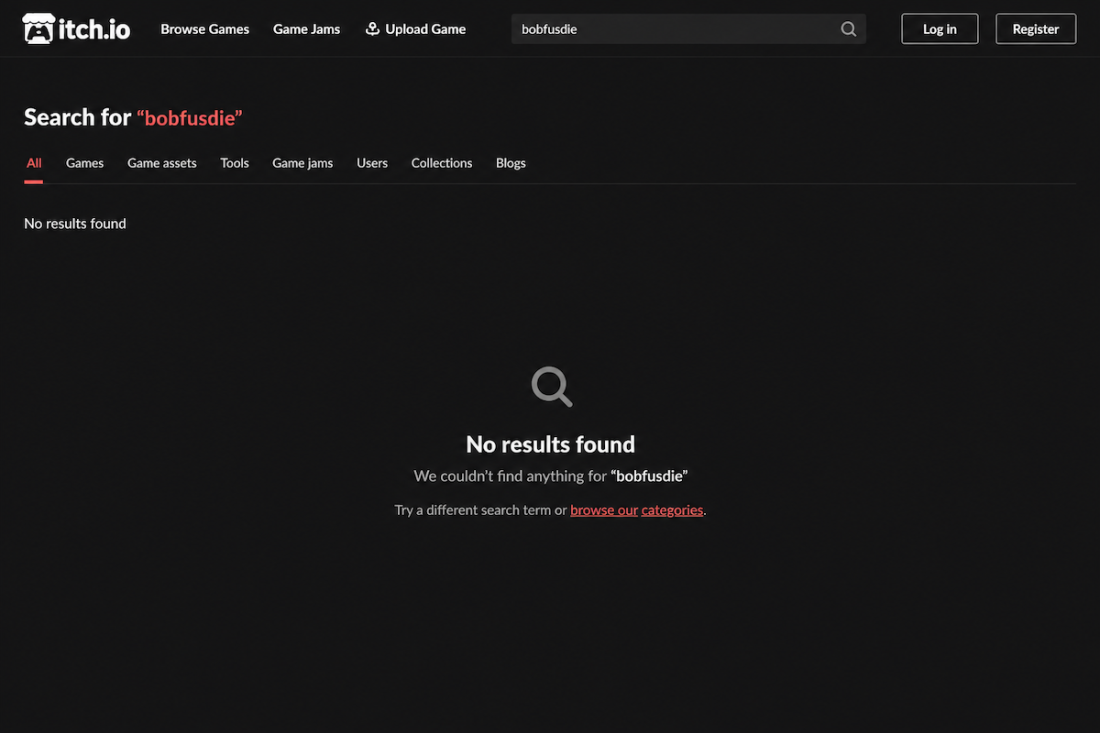
There is no legitimate Bobfusdie7.9 download, because there is no verifiable source for the software. The one location repeatedly named for it, a page at bobfus.itch.io/bobfusdie, returns a 404 error. It is not there.
No creator account under the name Bobfus exists on itch.io either. No profile, no other projects, no upload history.
That leaves nothing behind the name. No developer, no publisher, no store listing, no file from an identifiable source. The descriptions in circulation contradict each other because none of them describes an actual product. They describe a name.
Nothing here is worth installing, because there is nothing here to install. Any file offered to you under this name came from somewhere else.
Where Bobfusdie7.9 Actually Comes From
The trail is short. Across everything published about this term, exactly one concrete location is ever named: bobfus.itch.io/bobfusdie. That is the entire sourcing. The gameplay descriptions, the install steps, the specifications all trace back to that address or to nothing at all.
The address returns a 404. Not a redirect, not a maintenance notice, not a listing marked as removed by whoever uploaded it. The page is simply absent.
itch.io gives every creator a subdomain matching their username, so bobfus.itch.io would belong to a registered user called Bobfus. No such account surfaces. The platform indexes its creators and their work in public, and searches across itch.io’s own pages return nothing under that name: no profile, no game page, no devlog, no comment history, no game jam submission. Searching the wider web for the address produces only the guides that cite it, never the page they are citing.
A 404 today does not prove a page never existed. Creators delete projects, and itch.io does not preserve deleted pages. But a game that was genuinely uploaded, played and updated leaves marks that outlive its own page: forum threads, devlog posts, player comments, jam entries, screenshots, a creator with something else to their name. None of that is here either. Not a fragment survives, which is not what a deleted game looks like.
What that means in practice is that there is nowhere further to check. There is no developer to look up, no upload date to record, no file to describe. Any article telling you what the download contains, how big it is, which format it arrives in or which version you are getting is describing something it has never seen.
That is the finding. It is a smaller answer than the search results promise, and it is the only one the evidence supports.
Why You’ll See It Described Six Different Ways
Here is what the term gets called, and how each description survives contact with the evidence.
| What you’ll see it called | Does it hold up |
|---|---|
| A free indie game on itch.io | No. The named page returns a 404 and no creator account by that name exists |
| A virtual file system driver | No. No vendor, no documentation, no product page |
| A PC speed and file-handling tool | No. No product page exists anywhere |
| A multitasking app for developers | No. Full system requirements published, no download |
| An online multiplayer game with quests | No. No servers, no store listing |
| An indie puzzle game from a named studio | No. The named studio has no other releases |
Descriptions multiply around an obscure string because nothing exists to contradict them. A term with a real product behind it gets corrected quickly, because the vendor’s own page outranks the guesses. A term with nothing behind it rewards whoever publishes first and loudest, and each new page quietly treats the last one as a source. Someone invented the specifications in row four. Everyone after them repeated the figures, with no way to check them and no reason to try.
The result is a set of pages that agree on the spelling and nothing else. That the same string is at once a driver, a cleaner, a puzzle game and an online game with quests is not evidence of a versatile product. It is evidence that nobody writing about it knew what it was.
One site has published two separate guides to this term, giving two different answers. Not a correction, not an update. Two live pages, at odds with each other, under one masthead.
The Download Link That Isn’t There
The strongest evidence is not in what these pages claim. It is in what they leave out.
Nearly every guide answering where to download Bobfusdie7.9, for PC or anything else, gives the same instruction: use the official page, and only the official page. Avoid mirrors. Avoid third-party sites. Then the instruction stops. The address is never supplied. You are told to go somewhere and not told where it is.
A few do name an address. Every Bobfusdie7.9 download that gets traced to a specific location leads back to the itch.io page above, and that page is empty. So the advice fails in both directions at once: most pages cannot name their source, and the ones that can are pointing at a 404.
One page goes further still. Its safety warning carries a stray character sitting inside the phrase itself, mid-sentence, where no writer would ever put one. That is what a template looks like after it has been filled in rather than written, a placeholder nobody replaced, published without anyone reading the sentence back.
Put plainly: an instruction that cannot name its own source is not an instruction. It is the shape of one.
If a guide can’t tell you where to get something, it doesn’t know.
How to Check a Download Page Before You Trust It
The pattern that produced this mess is not unique to one keyword. Four signals separate a page written by someone who checked from a page generated at scale.
- Identical system requirements across unrelated sites. When several pages list the same processor, the same memory figure and the same disk space in the same order, they share a source rather than a measurement. Genuine requirements come from a vendor and get presented differently by whoever repeats them; copied ones arrive word for word.
- First-person install stories with no checkable specifics. “I downloaded it, and it ran fine on my old laptop” contains nothing anyone could verify: no version, no file size, no date, no error message. Real accounts include the awkward, boring particulars that fabricated ones never think to add.
- An official source referenced but never named. Watch for “the official site”, “the developer’s page” or “the official source” appearing repeatedly without a single address attached. A page that knows where something lives will tell you where it lives.
- Unrelated product names dropped mid-paragraph. Content farms reuse one skeleton across dozens of keywords, and the substitution is often incomplete, stranding a name from a different article in the text. If a paragraph mentions a product with no connection to the subject, you are reading a fill-in-the-blanks page.
Any one of these can be innocent. Two together mean nobody has fact-checked the page you are reading.
If You’ve Already Installed Something
If you downloaded a file under this name, it came from whoever was hosting it rather than from a developer. Worth taking seriously, but not worth panicking over. Most of what circulates under made-up product names is adware rather than anything more serious.
- Stop running it and leave it closed. Do not open it again to test what it does.
- Uninstall it through your computer’s usual apps-and-programs settings. Sort that list by install date while you are there, and look for anything else that appeared at the same moment, because bundled extras arrive quietly alongside the main file.
- Run a full scan with the security software already on your machine. A full scan, not a quick one, and let it finish before you carry on.
- Reset your browser’s default search engine and remove any extension you do not recognise. Bundled installers alter both, and the switch often goes unnoticed for weeks.
If you entered a password or payment detail anywhere in the process, change it from a different device.
Frequently Asked Questions
Is Bobfusdie7.9 real?
As a search term, yes, and a well-used one. As a product, no. Nothing verifiable sits behind it: no developer, no listing, and no file traceable to an identifiable source.
Is it a game or a program?
Neither has been demonstrated. Different pages describe it as both, and none of them offers evidence for either. Descriptions this far apart usually mean nobody involved has seen the thing.
Is it safe to download?
Safety cannot be assessed, because no file under this name comes from a source anyone can check. Anything offered to you is being supplied by an unknown party under a name with no owner. Leave it.
Where does it actually come from?
The only address ever named for it, an itch.io page under the username Bobfus, returns a 404, and no account by that name exists on the platform. There is no second source to fall back on.
Should You Download Bobfusdie7.9?
No, because there is no Bobfusdie7.9 download to make. The single source anyone names for this software does not exist, and every description of what it does was written by someone who never saw it.
If you arrived here from a page offering you a file, close that page. A download offered under a name with no traceable owner is a download from a stranger, whatever the surrounding article says about safety.
If you were chasing a specific game and this term is what you half-remembered, search instead for the details you are sure of: the studio, a character, something from the gameplay. That will find a real page. This one will not.